Learning Storage System - SAN

SAN stands for Storage Area Network. It is a centralized external storage system just like NAS. Advantages of a centralized system include better disk utilization, ease of management, and features such as storage tiering, snapshots and centralized backups.
According to Netapp.com:
A SAN is block-based storage, leveraging a high-speed architecture that connects servers to their logical disk units (LUNs). A LUN is a range of blocks provisioned from a pool of shared storage and presented to the server as a logical disk.
In SAN,
The client is known as the Initiator.
The storage System is known as the Target.
SAN Protocols
Fibre Channel Protocol (FCP)
Fibre channel is the original SAN protocol, and many protocols came later follow its characteristics, so it is important we understand FCP first.
Key attributes of FCP are:
- Lossless unlike TPC and UDP
- Different than Ethernet at all layers of the OSI stack
- Needs dedicated cables, switches, and adaptors
- Used to send SCSI command over the fibre channel network
- Supports bandwidth of 1, 2, 4, 8, 16, 32, and 128 Gbps
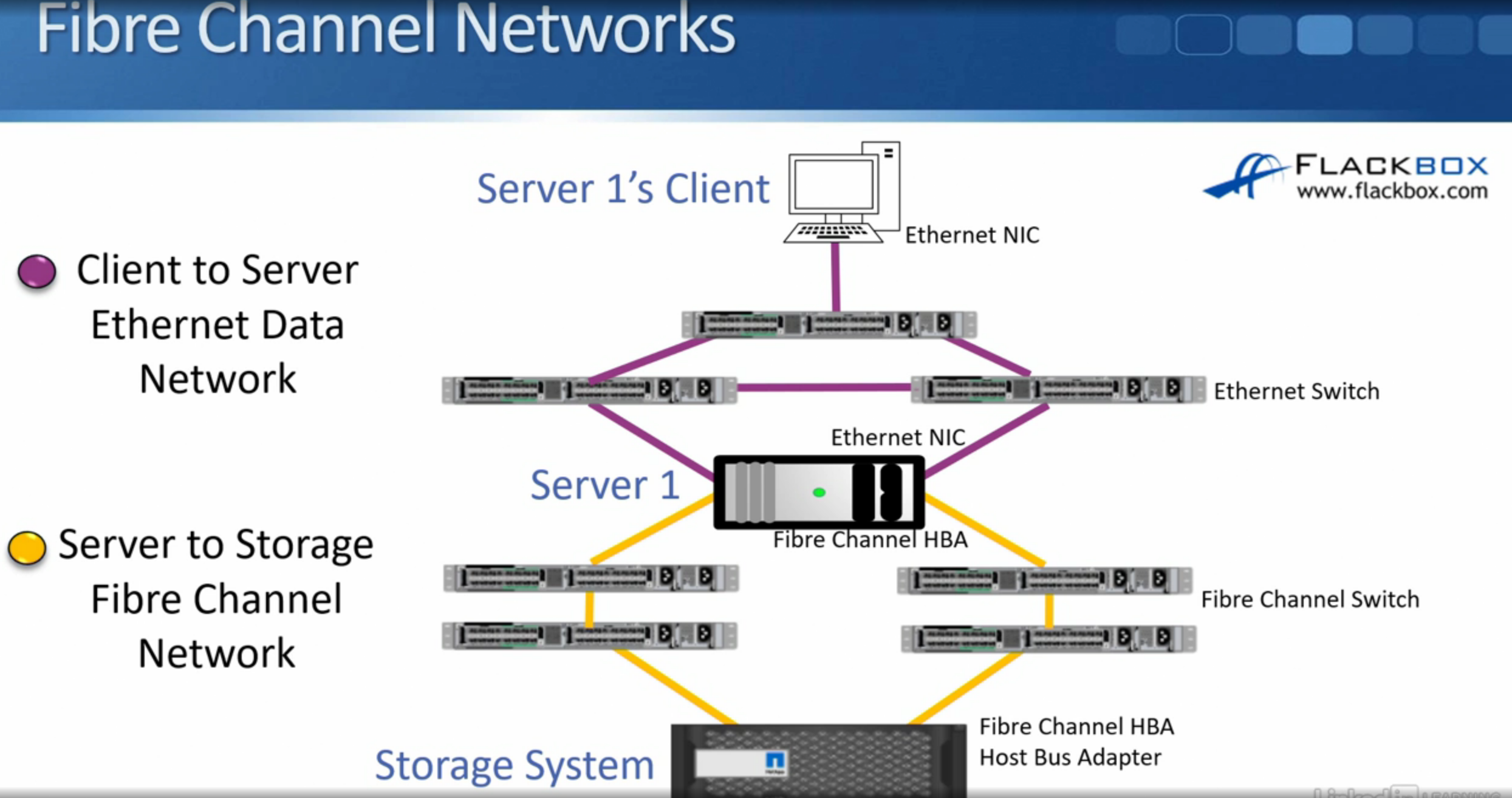
FCP uses World Wide Name (WWN) for its addresses. The format of the address is 8 byte and consists of 16 hexadecimals. For example, 00:12:01:ad:02:ae:8c:b9
There are two types of WWN - World Wide Node Name (WWNN) and World Wide Port Name (WWPN).
- WWNN is assigned to a node in the network, for example, a server or an HBA.
- WWPN is assigned to a port from a node.
- Think WWN as a MAC address
- We can also create aliases for WWNs
Security controls for FCP:
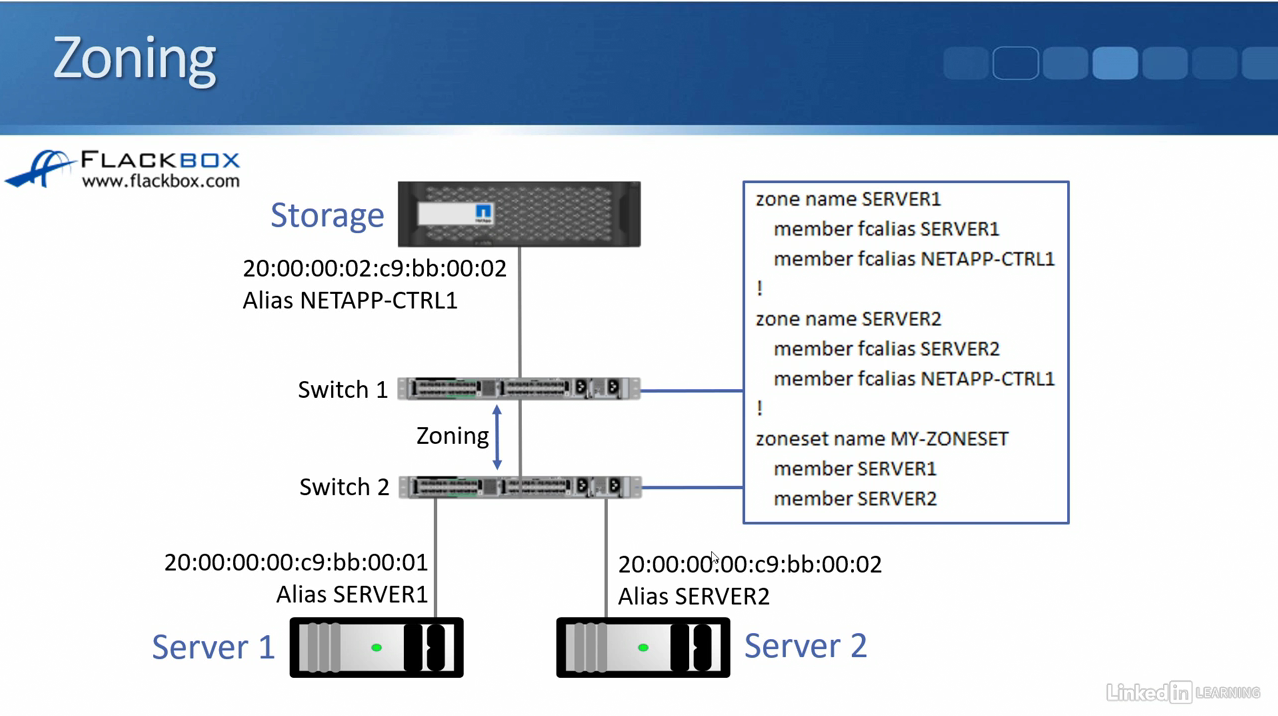
Zoning is a technic where we configure on the switches so that the servers cannot talk to each other over the fibre channel network.
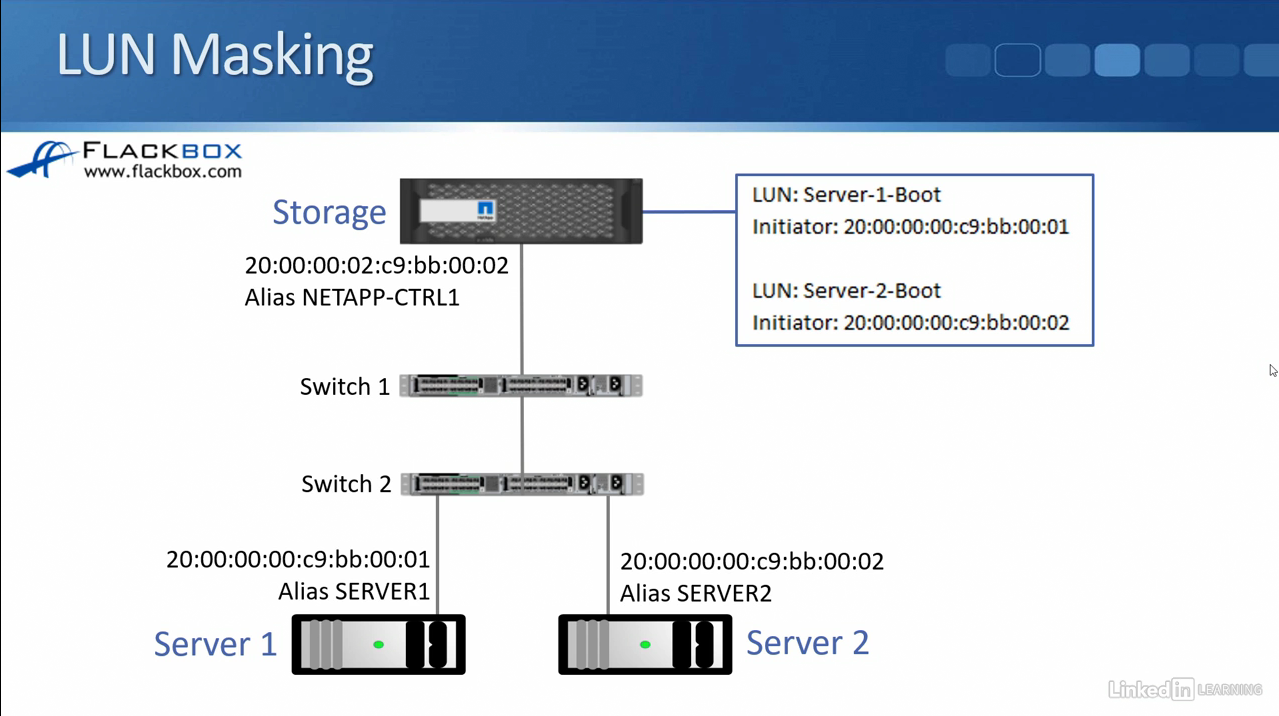
LUN Masking is a technic where we configure on the storage systems so that only the authorized initiator (server in this case) is allowed to connect to LUNs it has access to.
Switch Domain ID
Switch Domain ID is the identifier of each switch in the FCP network. It is unique within the network and one switch in the network will be automatically assigned as the principle switch. Each switch learns about other switches and how to route to them based on the switch domain ID.
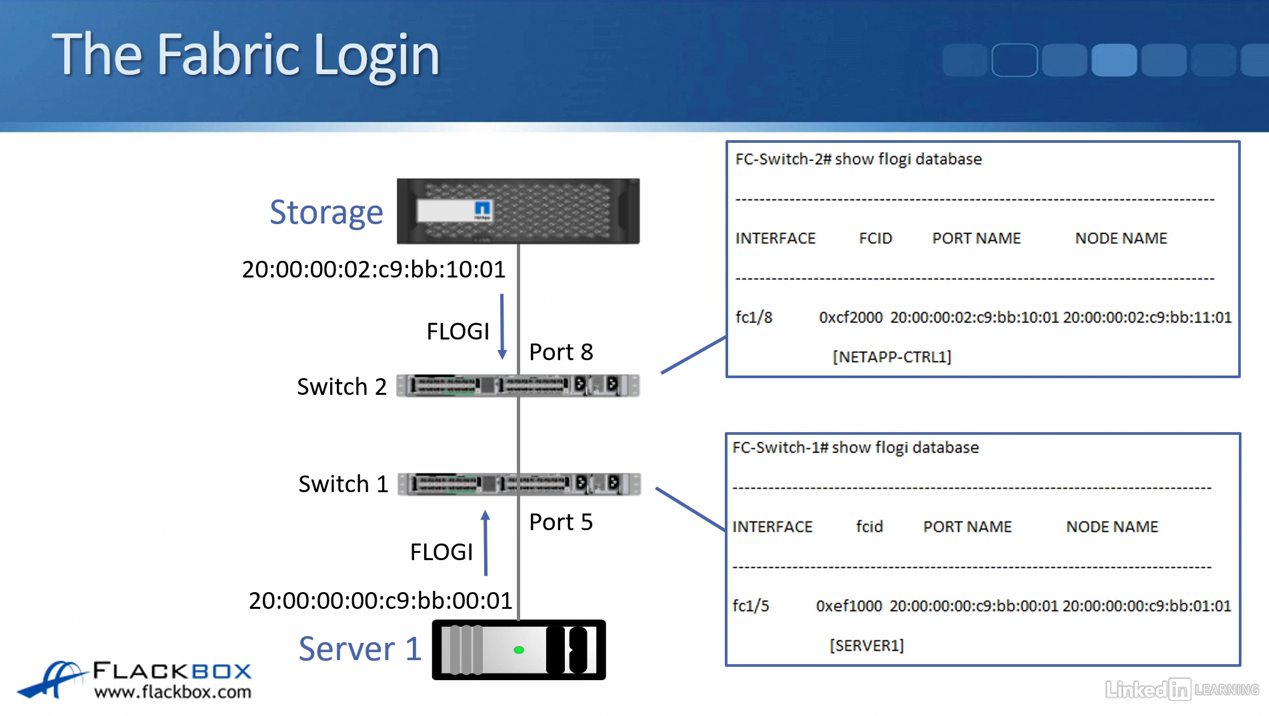
FLOGI (Fabric Login)
Switch Domain ID and switch port are used to generate Fibre Channel ID (FCID) for a host that is connected to that switch. This process is achieved by host sending FLOGI Fabric Login request when it physically attaches to the switchport. Think FCID as an IP address. Just like an ARP table, Fibre Channel switch maintains a table of FCIP and WWPN mappings.
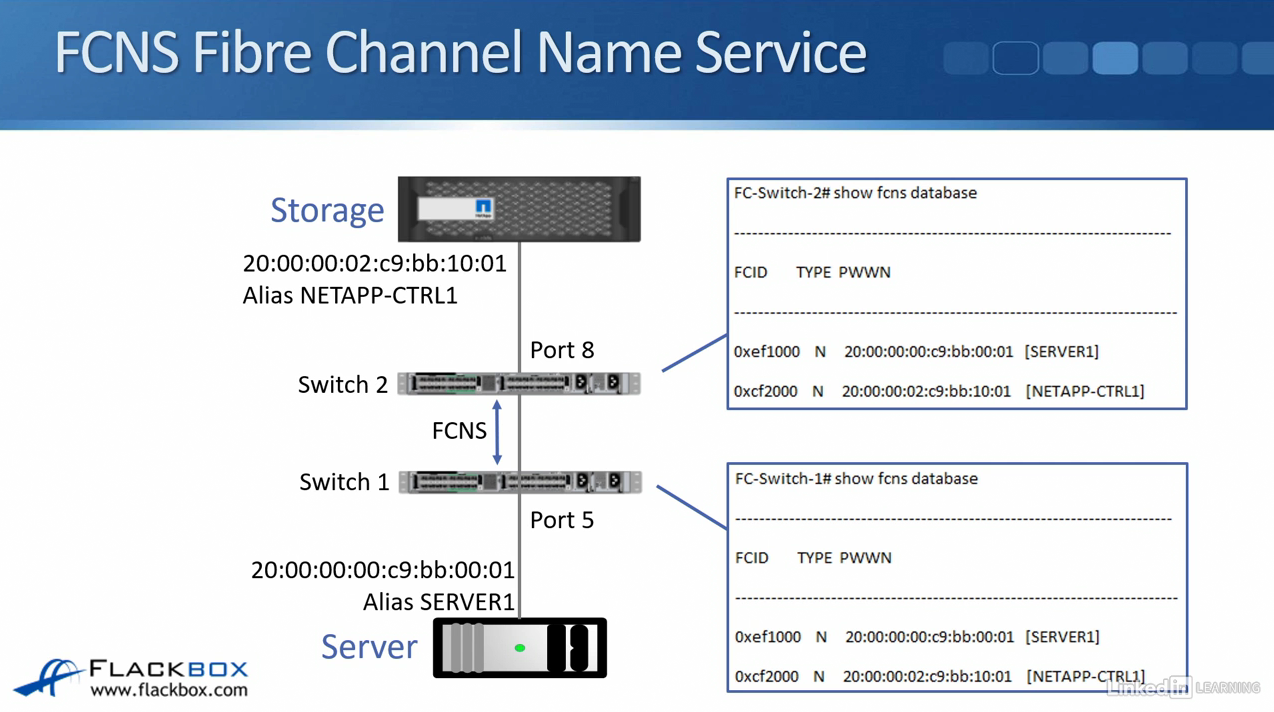
Fibre Channel Name Service (FCNS)
- Switches share the FLOGI database information with each other using the FCNS
- Switches learn WWPNs and how to route traffic
More to come...